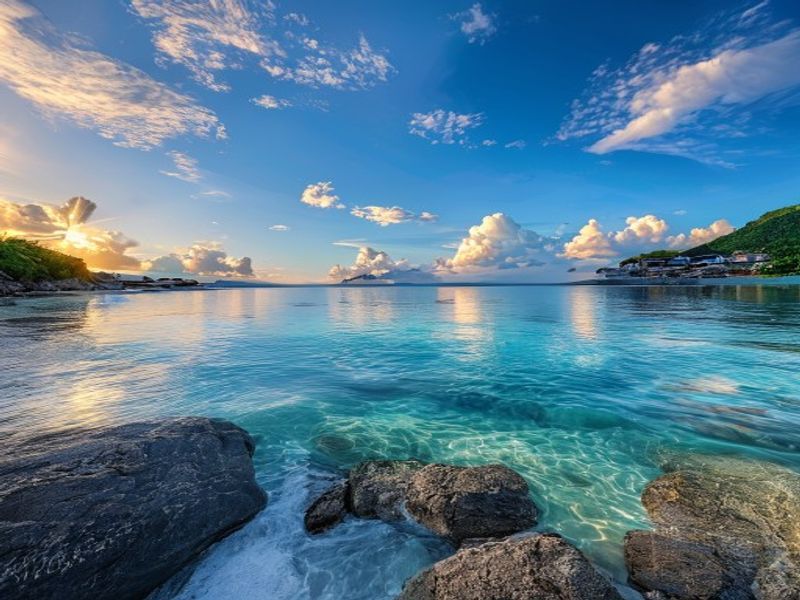
About Raja Ampat Islands: The Last Paradise on Earth
The Raja Ampat archipelago, whose name translates to 'Four Kings,' is a scattered constellation of over 1,500 small islands, cays, and shoals surrounding the four main islands of Waigeo, Misool, Salawati, and Batanta. Located west of the Bird's Head Peninsula of Papua Island, this remote paradise administratively falls under Raja Ampat Regency and Sorong City in Southwest Papua Province. The archipelago has earned its reputation as one of the most biodiverse marine habitats on Earth, attracting divers, marine biologists, and nature enthusiasts from every corner of the globe.
The underwater world of Raja Ampat is nothing short of spectacular. Scientific surveys have documented 574 species of hard corals, representing 75% of all known coral species worldwide, and 553 species of reef fish. The waters here are part of the Coral Triangle, the global center of marine biodiversity, where nutrient-rich currents from the Pacific and Indian Oceans converge to create ideal conditions for marine life. Diving and snorkeling in Raja Ampat reveal gardens of soft and hard corals in every imaginable color, schools of barracuda and trevally, graceful manta rays gliding through cleaning stations, reef sharks patrolling the drop-offs, and even the occasional passing whale shark or dugong.
Beyond the water, Raja Ampat's terrestrial landscapes are equally breathtaking. Dramatic karst limestone islands rise vertically from turquoise waters, their steep cliffs covered in dense jungle vegetation. The iconic viewpoint at Piaynemo offers panoramic vistas of these mushroom-shaped islands scattered across the bay, creating a scene that has become synonymous with Raja Ampat's otherworldly beauty. The islands are also home to endemic bird species including the Red Bird of Paradise and Wilson's Bird of Paradise, making it a destination for birdwatchers as well.
The local communities in Raja Ampat, predominantly Papuan and descendants of Austronesian seafarers, have maintained their traditional ways of life for generations. Many villages practice sustainable fishing and have embraced ecotourism as a means of livelihood while preserving their cultural heritage. Visitors staying in homestays can experience authentic Papuan hospitality, enjoy traditional meals of fresh fish and sago, and learn about customary practices that have sustained these communities for centuries.
Accessing Raja Ampat requires planning and commitment, which has helped preserve its pristine condition. Most travelers fly to Sorong, the gateway city on Papua's mainland, and then take a ferry or speedboat to Waisai, the capital of Raja Ampat Regency. The journey from Waisai to various dive sites and islands is typically done by chartered boat. Accommodation options range from basic homestays that offer cultural immersion to luxury eco-resorts with overwater bungalows, all designed to minimize environmental impact.
The best time to visit Raja Ampat is during the dry season from October to April, when seas are calmer and visibility is optimal for diving. However, the remote location and limited infrastructure mean that travel here comes with challenges, including higher costs, limited internet connectivity, and the need for flexibility when weather conditions change. These factors, however, are part of what makes Raja Ampat special - it remains a destination for travelers seeking authentic encounters with nature rather than mass tourism conveniences.
Conservation efforts in Raja Ampat have been remarkably successful, thanks to collaboration between local communities, the Indonesian government, and international conservation organizations. Marine Protected Areas cover significant portions of the archipelago, and many dive sites operate under strict no-take policies. The Raja Ampat Marine Park entrance fee, collected from all visitors, directly funds conservation programs and provides benefits to local communities, creating a sustainable model where preservation and livelihoods go hand in hand.
Whether gliding over pristine reefs teeming with life, kayaking through hidden lagoons surrounded by towering karsts, watching the sunset paint the islands in gold and crimson, or simply floating in the impossibly clear water, Raja Ampat offers experiences that remain etched in memory long after departure. This is not merely a destination but a reminder of what Earth's oceans looked like before human impact - a living museum of marine biodiversity and a testament to the power of conservation. Raja Ampat is home to 75% of all known coral species worldwide. The archipelago has over 1,500 islands with crystal-clear waters and dramatic karst landscapes. The iconic viewpoint at Piaynemo offers panoramic vistas of mushroom-shaped islands. The islands are also home to endemic bird species including the Red Bird of Paradise and Wilson's Bird of Paradise, making it a destination for birdwatchers as well. The local communities, predominantly Papuan, maintain traditional customs. (Verified June 2026). Raja Ampat is home to 75% of all known coral species worldwide. The archipelago has over 1,500 islands with crystal-clear waters and dramatic karst landscapes. The iconic viewpoint at Piaynemo offers panoramic vistas of mushroom-shaped islands. The islands are also home to endemic bird species including the Red Bird of Paradise and Wilson's Bird of Paradise, making it a destination for birdwatchers as well. The local communities, predominantly Papuan, maintain traditional customs. (Verified June 2026).